Gravel Driveway Installation & Repair in Delaware County, OH
A gravel drive that sheds water instead of holding it — cut in new, or brought back from washboard and potholes.
Rural and semi-rural Delaware County runs on gravel drives, and most of the ones that fail early failed for the same two reasons: no crown and no base. Water that cannot run off a drive runs down it, and a drive with no compacted base pushes stone into soft ground until it disappears.
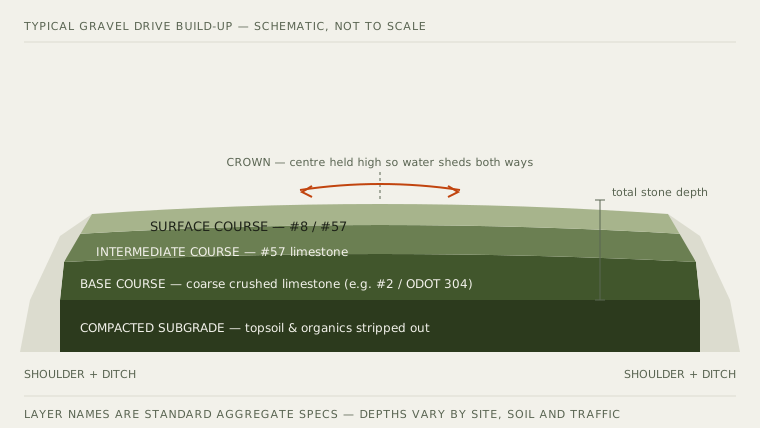
For new drives we cut the path, establish a base, and build a crown so water sheds to the sides. For existing drives we regrade the surface, reestablish that crown, address the spots that hold water, and top with the right material rather than just dumping stone over potholes.
Adding fresh gravel over an uncrowned, unrepaired drive is the most common mistake we get called to undo. It looks fixed for one season and then the same potholes come back in exactly the same places, because nothing about the drainage changed.
We are fully licensed and insured. Work is performed by experienced local crews. Proof of credentials, recent project photos, and references are available on request.
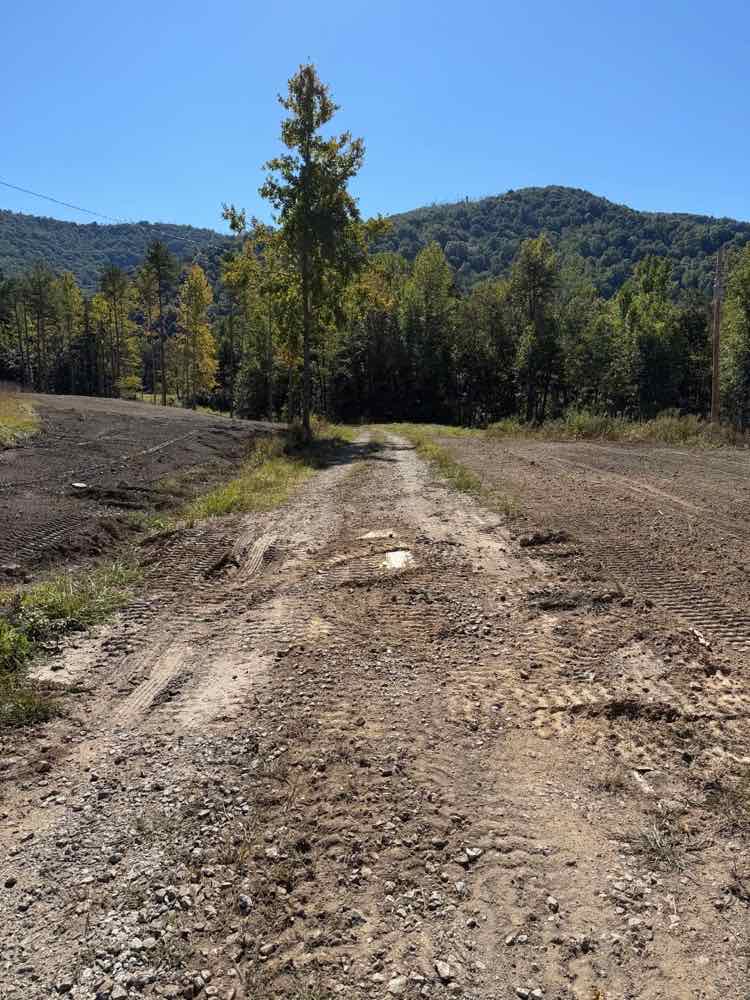
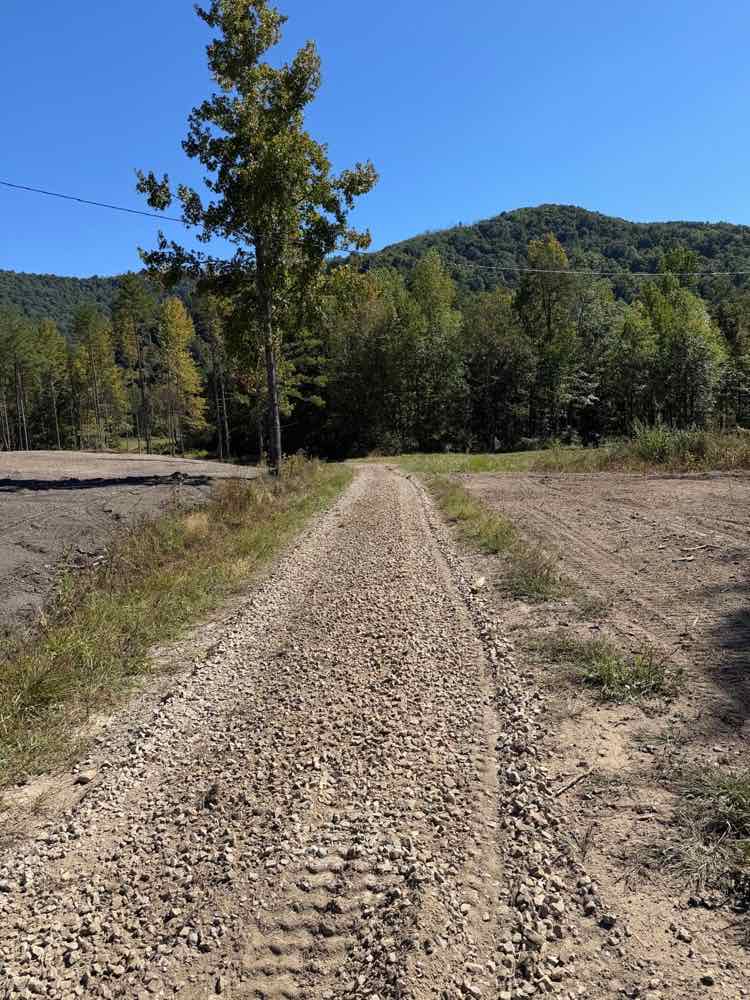
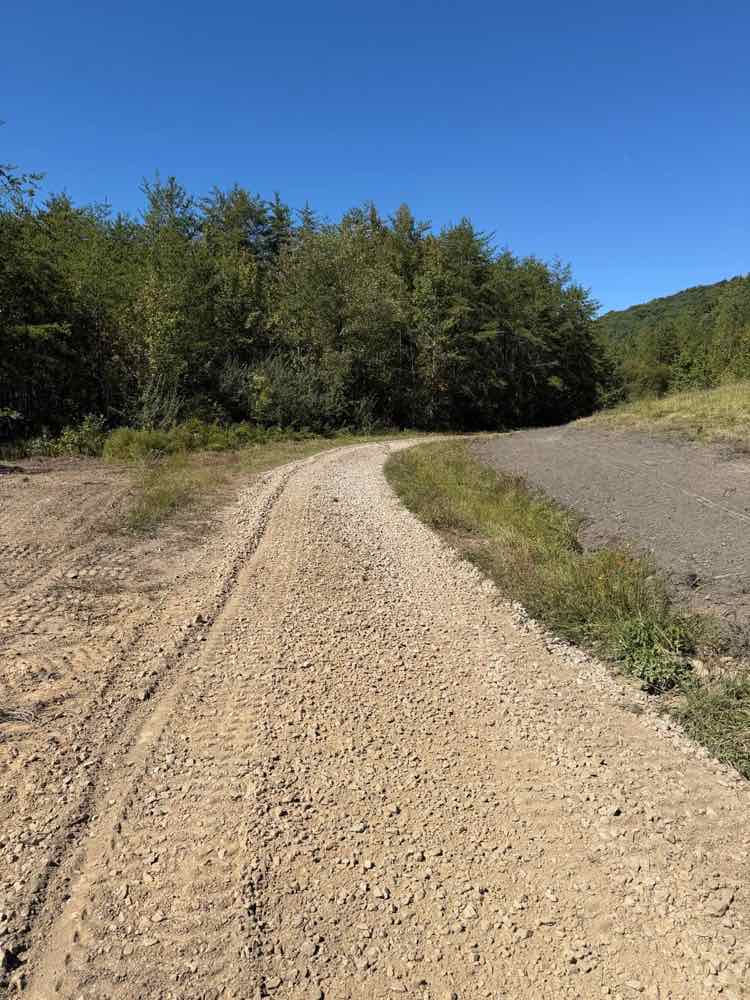
Example photos of the kind of work described on this page.
Driveway Work We Handle
- New gravel drives — cut in, based, crowned, and topped.
- Regrading and reshaping — restoring crown on a drive that has gone flat or dished.
- Potholes and washboarding — repaired at the cause, not just filled over.
- Culverts and drainage points — so water crosses the drive instead of running down it.
- Drive extensions and turnarounds — additional parking, or access to a back building.
- Licensed & insured — proof of credentials and insurance available on request.
Gravel Delivery in Delaware, Ohio
Every driveway job we do in Delaware, Ohio includes the gravel — delivered, spread, and compacted as part of the work rather than dropped in a pile for you to deal with. That is the part most people searching for gravel delivery in Delaware actually need: a dump truck can leave fifteen tons of stone at the end of your drive, but it takes a tracked machine to spread it to an even depth, shape a crown into it, and compact it so it stays put. Stone that is dumped and raked by hand ends up thick where the pile was and thin everywhere else, and it migrates into the yard the first wet month.
If you only need gravel delivered and spread — topping an existing drive that still has its shape, or filling a parking area — that is a smaller job than a full rebuild and we price it that way. If the drive underneath has lost its crown or its base, we will tell you before we bring stone, because gravel delivery on top of a drive that holds water is money you spend again next year. Either way the estimate is free and written, and it covers the stone, the trucking, and the spreading in one number for your Delaware, Sunbury, Ostrander, or Galena address.
Gravel Types for Delaware County Driveways
Most gravel in Delaware County is crushed limestone, sold by the Ohio aggregate sizes the quarries use. A driveway is built in layers, and the layers use different stone. The base is typically #304 — crushed limestone with fines mixed in — because it compacts into a hard, load-bearing layer. The driving surface is usually #57 (roughly three-quarter-inch clean stone) for a loose, well-draining top, or #411 (57s with fines) when you want a surface that knits together and stays quieter under tires. Larger #2 stone goes in first only when the ground is soft enough to need bridging. Recycled crushed concrete is a cheaper base option and does the same job on a residential drive.
Quantity comes down to length, width, and depth. As a rule of thumb, a drive twelve feet wide takes roughly a ton of stone for every ten feet of length at a two-inch lift, and a new drive needs both a base course and a top course, so it takes two to three times the stone of a simple topping. A tandem dump truck carries roughly fifteen to twenty tons. We measure the drive on the walk and put the tonnage in the estimate rather than guessing from a phone call. After clearing a wooded lot for a build, the new drive is usually the last thing to go in — see land clearing and grading for the work that comes before it.
How Much Gravel a Delaware County Driveway Actually Needs
The question behind most gravel searches in Delaware, Ohio is really a quantity question: how much stone, and what does that come to. The arithmetic is simple enough to do on your own drive before anyone quotes you. A drive twelve feet wide takes roughly a ton of stone for every ten feet of length at a two-inch lift — so a hundred-foot drive at that width is in the neighbourhood of ten tons for a single topping course.
Two things change that number sharply. A new drive is built in courses — a compacted #304 base and then a driving surface on top — so it takes two to three times the stone of a simple re-topping, and the base is usually the deeper of the two. And depth is not a preference: two inches is a refresh over a drive that still has its shape, while a drive carrying farm equipment, delivery trucks or a contractor's tandem wants more stone and a stronger base under it than a suburban car drive does.
A tandem dump truck carries roughly fifteen to twenty tons, which is where the practical minimums come from — it is rarely worth mobilising a truck for two tons, and most driveway jobs land between one and three loads. We measure the drive on the walk, do this arithmetic in front of you, and put the tonnage and the courses in the written estimate rather than guessing from a phone call.
What Moves the Price of Gravel in Delaware County
Gravel in this part of Ohio is crushed limestone, and the stone itself is usually the smaller half of what you pay. Three things move the number more than the material does.
Trucking distance. Aggregate is priced at the quarry and then hauled, and hauling heavy material is expensive per mile. A parcel close to a working quarry is cheaper to stone than one on the far side of the county, and that difference shows up on every load rather than once.
Which stone. Clean, screened sizes like #57 cost more per ton than a base product like #304 that carries the fines left over from crushing. Recycled crushed concrete sits below both and does the same job as a base on a residential drive — worth asking about if the budget is tight and the drive is not carrying heavy loads.
What has to happen before the stone. This is the one that surprises people. Stone dropped on a drive that has lost its crown, or that is holding water in a soft spot, disappears into the soft ground and you buy it again next year. If the base needs reshaping, a soft area needs digging out, or a crown needs cutting back in, that is machine time quoted separately — and skipping it is the most common way people spend twice. Where a drive is cut in for the first time after clearing, the grading that sets its shape and fall comes first for the same reason.
Delivery, Spreading, and Getting a Truck to the Drive
If what you need is stone delivered and spread rather than a rebuild, that is a real job and we price it as one. The practical constraints are worth knowing before you call anyone.
Access decides the truck. A tandem needs room to back in and room to raise a bed — clear of low limbs and overhead lines, and on ground firm enough to carry a loaded truck without sinking. On a long rural drive or a soft spring approach, stone sometimes gets stockpiled at the road and moved back with a tracked machine instead: slower, but it does not leave ruts the length of your property.
Dumped is not spread. A truck can leave fifteen tons at the end of your drive in ten minutes. Turning that pile into an even two-inch lift with a crown on it, compacted so it stays where you put it, is the part that decides whether the stone is still there next spring. Hand-raked stone ends up thick where the pile was, thin everywhere else, and in the yard by the first wet month.
Timing. Stone goes down best on firm ground. The county's clay drains slowly, so a drive that takes a load cleanly in September can rut badly in April — the same seasonal constraint that governs grading work here. If a drive is failing in a wet stretch, the honest answer is usually to shape and drain it first and stone it when the ground will hold what you are paying for.
Licensed, Insured & Local Experts
We are fully licensed to operate in Ohio and carry comprehensive general liability insurance. Proof of licensing and current insurance certificates are available on request — simply ask when we provide your free written estimate.
The work is performed by experienced local professionals who specialize in land clearing for Delaware and surrounding communities. We know the local conditions and standards.
Real results and reviews build trust. See real transformations on the Results & Reviews page. Request your free estimate and we’ll share recent before-and-after photos from comparable jobs in your area plus customer references. On-page Google reviews and job-site proof are priorities as we grow our local track record.
Why Choose Delaware County Land Clearing
We’re local to Delaware, fully licensed and insured, and committed to careful work and honest pricing. You’ll get a clear written estimate before we start and a clean property when we finish.
Gravel Driveway Installation & Repair — Questions, Answered
Do you deliver gravel in Delaware, Ohio?
Yes, as part of the driveway work. Gravel delivery in Delaware, Ohio is included in every installation and repair we do — the stone is trucked in, spread with a tracked machine, shaped, and compacted, all in one visit and one price. If you only need an existing drive topped, that is a smaller job and we price it as one. Tell us the length and width of the drive when you request an estimate and we will put the tonnage in writing.
How much gravel does a driveway in Delaware County need?
It depends on length, width, and how many layers are going down. A drive twelve feet wide needs roughly a ton of stone for every ten feet of length at a two-inch depth. A simple topping is one layer; a new drive needs a compacted base course plus a driving surface, so plan on two to three times that. A tandem dump truck carries about fifteen to twenty tons, and most residential drives in Delaware County take between one and three loads.
Why does my gravel driveway keep developing potholes?
Almost always water plus a weak base. If the surface is flat instead of crowned, water sits on it, softens what is underneath, and traffic pumps stone down into the mud. Fixing it means restoring the crown and the base, not adding another layer of stone on top.
What kind of gravel is right?
Typically a compacting base material underneath with a driving surface on top. A single size of clean, round stone stays loose and pushes around under tires forever. The blend matters more than the quantity.
How often does a gravel drive need maintenance?
A properly crowned and based drive needs periodic regrading and occasional topping rather than constant repair. Drives that need work every single year are usually telling you the base or the crown was never right.
Are you licensed and insured?
Yes. We are fully licensed and carry liability insurance. Proof of license and insurance is available before work begins — just request it with your estimate.
Can I see real reviews or recent work?
Of course. See real transformations on the /reviews/ page. Request a free estimate and we will send recent before-and-after photos from similar jobs in the area plus references. Google reviews and on-site proof are part of our process.
How much gravel do I need for my driveway in Delaware, Ohio?
As a working rule, a drive twelve feet wide takes about a ton of stone for every ten feet of length at a two-inch lift — roughly ten tons for a hundred-foot drive being re-topped. A new drive needs both a base course and a driving surface, so it takes two to three times that. A tandem dump truck carries about fifteen to twenty tons, which is why most driveway jobs come out to one to three loads. We measure it on site and put the tonnage in the written estimate.
What kind of gravel is best for a driveway in Delaware County?
It depends on the layer. The base is usually #304 — crushed limestone with the fines left in, because that is what compacts into a hard load-bearing course. The driving surface is either #57, a clean three-quarter-inch stone that drains well and stays loose, or #411, which is #57 with fines so it knits together and rides quieter. Larger #2 stone goes underneath only where the ground is soft enough to need bridging. Recycled crushed concrete is a cheaper base and does the same job on a residential drive.
Can you just deliver gravel without doing the work?
We deliver and spread. What we do not do is drop a pile and leave, because that is where most gravel money gets wasted — dumped stone ends up thick in one place and thin everywhere else and migrates off the drive within a season. If your drive still has its shape and only needs a topping course, that is a small job and it is priced as one. If it has lost its crown or has soft spots holding water, we will say so before bringing stone rather than after.
Where does the gravel come from?
Local quarries. Gravel in this part of Ohio is crushed limestone sold by the standard Ohio aggregate sizes, priced at the quarry and then hauled — which is why trucking distance affects your number as much as the stone does. Delivery and spreading are included in the driveway estimate as one written figure, so the stone, the trucking and the machine time are not three separate surprises.
Our Other Services
Serving Delaware, Powell, Lewis Center, Sunbury and all of Delaware, Ohio.
Get a Free Driveway Estimate
Fast, friendly, no-obligation quotes for homeowners in Delaware, Ohio.