These two get used interchangeably in conversation and they are not the same job. Picking the wrong one is the most expensive avoidable mistake in this trade, and it goes wrong in both directions.
Forestry mulching
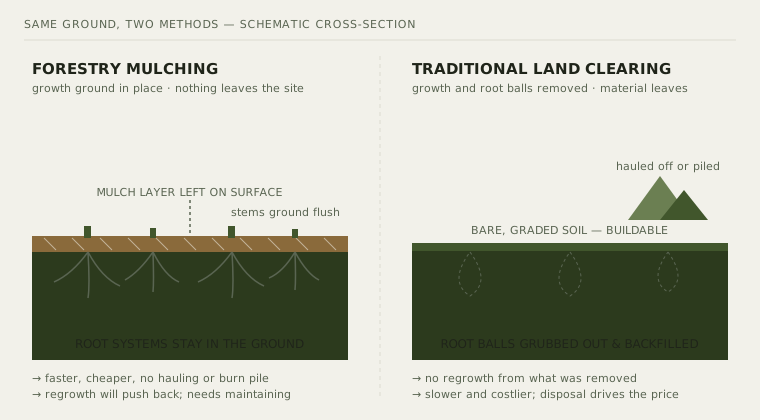
A rotating drum head grinds standing vegetation where it stands and leaves it on the ground as mulch. Brush, undergrowth, and trees up to several inches across go down in a single pass.
- Cost: lower — no trucking, no disposal, fewer passes.
- Roots: stay in the ground.
- Ground left behind: covered in mulch, which controls erosion.
- Regrowth: suppressed for a while, but it will return.
- Best for: trails, fence lines, views, hunting ground, pasture edges, general reclamation.
Traditional land clearing
Material is removed from the site. Root balls are extracted, stumps come out, and debris is piled or hauled away.
- Cost: higher — disposal and root work are both labor and equipment intensive.
- Roots: removed.
- Ground left behind: bare, and gradeable.
- Regrowth: minimal, because the root systems are gone.
- Best for: building sites, anything getting finish graded, permanent conversion of ground.
The one question that decides it
Is anything getting built, paved, or finish graded on this ground?
If yes, you need full clearing. Roots left in place will rot and settle under whatever goes on top, and no amount of grading fixes that afterward.
If no — you want the ground open, usable, and maintainable — mulching does the job for meaningfully less money and leaves better erosion protection behind.
Where both get used
On larger parcels it is common to split the property: full clearing on the building footprint, driveway, and immediate yard, and mulching on the remaining acreage where you just want the ground opened up. That combination often costs considerably less than clearing everything to the same standard, and there is rarely a reason to clear ground that is only ever going to be walked on.
For price ranges on both methods, see the Delaware County land clearing cost guide.